How to Taste Wine Like a Professional
A step-by-step guide to wine tasting using the look, smell, taste, and evaluate framework used by sommeliers and wine professionals worldwide.
Why Tasting Is Different from Drinking
Drinking wine is passive — you pour, you sip, you enjoy. Tasting wine is active. It means paying deliberate attention to what is in your glass: what it looks like, what it smells like, how it feels on your tongue, and how the flavors develop and linger. Professional tasters — Sommeliers, winemakers, critics — use a structured method to evaluate wine consistently, and that same method is available to anyone willing to slow down for a few minutes.
You do not need a refined palate or years of training to taste wine well. You need a clean glass, decent lighting, and a willingness to think about what you are experiencing.
The Four-Step Framework
Wine professionals around the world use some variation of this sequence: Look, Smell, Taste, Evaluate. Here is how each step works.
Step 1: Look
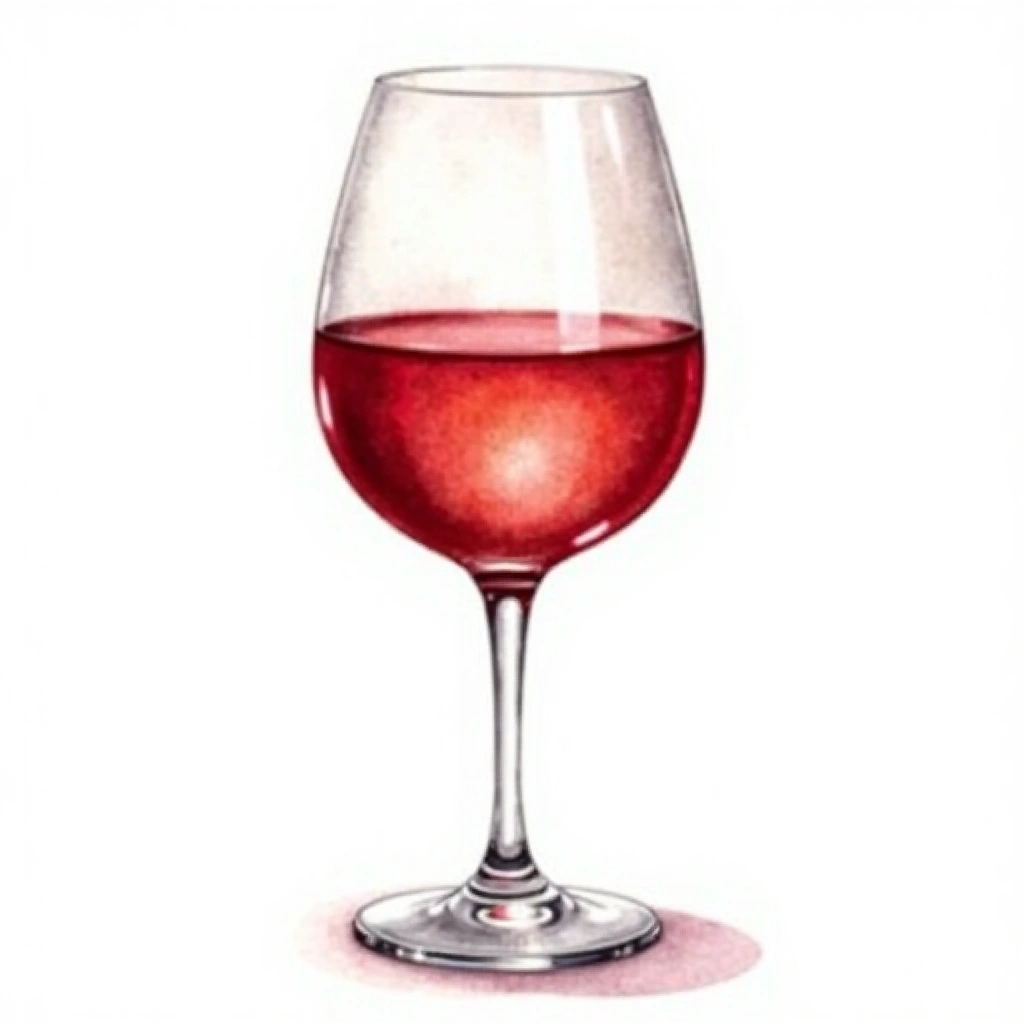
Hold your glass by the stem (so your hand does not warm the wine) and tilt it at a 45-degree angle against a white background — a napkin, tablecloth, or sheet of paper works fine.
What to Observe
Color intensity: Is the wine pale or deep? Pale wines tend to be lighter in Body; deeply colored wines are often more concentrated.
Hue: Red wines range from purple (young) to ruby (moderate age) to garnet and brick (older). White wines range from nearly colorless (very young, cool-climate) to straw, gold, and amber (older or oak-aged). Color tells you a lot about age and winemaking before you even take a sniff.
Clarity: Is the wine clear or cloudy? Modern wines are almost always clear. Some natural wines or unfiltered wines may show haziness, which is not a flaw but rather a stylistic choice.
Viscosity: Swirl the glass and watch the "legs" or "tears" that run down the inside. Thicker, slower legs usually indicate higher alcohol or residual sugar. This is a minor observation — legs tell you more about physics than quality.
Step 2: Smell (The Nose)
The Nose of a wine — its aroma and bouquet — is arguably more important than the taste. Humans can distinguish thousands of distinct scents but only five basic tastes (sweet, sour, salty, bitter, umami). Most of what we perceive as "flavor" is actually aroma working through the retronasal passage connecting your throat to your nasal cavity.
How to Smell Wine
- First sniff — Before swirling, take a gentle sniff. These initial aromas are often the most delicate and can disappear once you agitate the wine.
- Swirl — Give the glass two or three circular swirls. This increases the wine's surface area and volatilizes aromatic compounds.
- Deep sniff — Put your nose into the glass and inhale. Do not be shy about it. Professional tasters practically bury their noses in the glass.
What to Look For
Aromas fall into three categories:
- Primary aromas — Come from the grape itself. Fruit, floral, and herbal notes. Sauvignon Blanc often smells of grapefruit and cut grass. Pinot Noir suggests cherry and violet.
- Secondary aromas — Come from Fermentation and winemaking. Yeast, bread dough, butter (from malolactic fermentation), and cream.
- Tertiary aromas — Come from aging. Vanilla and cedar (from oak), dried fruit, leather, tobacco, earth, mushroom, honey. These develop over months or years.
If a wine smells off — like wet cardboard, vinegar, or nail polish — it may be flawed. Musty, damp-cardboard aromas usually indicate cork taint (TCA contamination). Sharp vinegar indicates volatile acidity.
Step 3: Taste (The Palate)
Take a moderate sip — enough to coat your entire mouth — and let the wine sit on your tongue for a few seconds before swallowing or spitting. (Professional tasters always spit when evaluating many wines to stay sharp.)
What to Assess on the Palate
Sweetness: Does the wine taste dry (no perceptible sugar), off-dry (a hint of sweetness), or sweet? Most table wines are technically dry, even if they have fruity flavors that suggest sweetness.
Acidity: How tart or fresh does the wine feel? High acidity makes your mouth water. Low acidity feels soft or flat. Acidity is the backbone of white wines and plays a supporting role in reds.
Tannin (primarily reds): Does the wine create a drying, gripping sensation on your gums and the sides of your tongue? Young, tannic wines like Cabernet Sauvignon or Nebbiolo can feel astringent. Well-integrated tannins feel firm but smooth.
Body: How heavy does the wine feel in your mouth? Think of the difference between water (light body), whole milk (medium body), and cream (full body). Alcohol, sugar, and extract all contribute to body. Bold Red wines have full body; a Crisp White Pinot Grigio is light-bodied.
Flavor: Now identify specific flavors. Do you taste dark fruit or red fruit? Citrus or stone fruit? Spice, herbs, earth? Do not worry about identifying exactly the right descriptor — there is no single correct answer. Your palate is unique, and legitimate tasters can disagree about whether a wine shows blackberry or plum.
Alcohol: Is the wine hot (high alcohol, often above 14.5%) or well-balanced? Excessive alcohol burn is a flaw in most contexts, though it is expected in some fortified wines.
Step 4: Evaluate the Finish
The Finish is what happens after you swallow (or spit). How long do the flavors linger? Does the wine leave pleasant echoes of fruit and spice, or does it disappear instantly?
Length
- Short finish — Flavors vanish within a few seconds. Common in simple, everyday wines.
- Medium finish — Flavors persist for 5–10 seconds.
- Long finish — Flavors linger for 15 seconds or more. This is a hallmark of high-quality wine. Great wines from Burgundy or Barossa Valley can have finishes that last a minute.
Quality and Balance
After assessing all four steps, ask yourself a few summary questions:
- Is the wine balanced? No single element — acidity, tannin, alcohol, fruit — should dominate. Balance is the most reliable indicator of quality.
- Is it complex? Does the wine show multiple layers of flavor that evolve as you taste, or is it one-dimensional?
- Is it pleasant? This sounds obvious, but after all the analytical work, the fundamental question remains: do you enjoy drinking this wine?
Building Your Vocabulary
Wine tasting vocabulary can feel pretentious, but it serves a real purpose: communication. When you describe a wine as having "bright acidity, ripe cherry fruit, and a silky finish," another wine person immediately understands what you mean.
Practical Tips
- Start with broad categories before getting specific. Is the fruit red or black? Is the wine light or heavy?
- Use familiar references. "Smells like my grandmother's strawberry jam" is more useful than guessing at obscure descriptors.
- Keep a tasting notebook (or use your phone). Write down what you smell, taste, and think. Over weeks and months, patterns emerge — you will start noticing that you consistently enjoy wines with high acidity, or that you prefer lighter-bodied reds to heavy ones.
- Taste comparatively. Open two wines side by side. Differences become obvious when you have a reference point.
Common Descriptors
| Category | Examples |
|---|---|
| Red fruit | Cherry, raspberry, strawberry, cranberry |
| Black fruit | Blackberry, black cherry, plum, cassis |
| Citrus | Lemon, lime, grapefruit, orange zest |
| Stone fruit | Peach, apricot, nectarine |
| Tropical fruit | Pineapple, mango, passion fruit |
| Floral | Violet, rose, lavender, honeysuckle |
| Earth | Wet stone, forest floor, mushroom, clay |
| Spice | Black pepper, clove, cinnamon, vanilla |
| Herbal | Mint, eucalyptus, thyme, green bell pepper |
| Oak | Toast, cedar, smoke, coconut |
You will develop your own preferred vocabulary over time. The goal is consistency: use the same words for the same sensations so you can compare your notes across different tastings.
Common Beginner Mistakes
- Tasting wine too cold or too warm. Temperature dramatically affects aroma and flavor. Pull reds from the counter 15 minutes early; take whites from the fridge 10 minutes early.
- Skipping the smell. The nose reveals more than the palate. Never shortchange Step 2.
- Overthinking descriptors. Do not stress about finding the "right" word. If a wine smells like peach to you, it smells like peach.
- Ignoring context. The same wine tastes different at a dinner party and in a sterile tasting room. Ambiance, food, and company all affect perception.
- Confusing price with quality. Expensive wines are not always better. Train your palate by tasting across price ranges and trust your own preferences.
Setting Up a Tasting at Home
One of the best ways to develop your tasting skills is to organize comparative tastings with friends. Here is a simple format.
Theme Ideas
- Grape comparison: Three different Pinot Noir wines from three different countries (Burgundy, Oregon, New Zealand).
- Old World vs New World: Cabernet Sauvignon from Bordeaux next to one from Napa Valley.
- Price blind tasting: Three wines at different price points ($10, $25, $50) tasted blind. You might be surprised which one you prefer.
- Style spectrum: A Light Red, a Medium Red, and a Bold Red to understand Body differences.
Practical Setup
- Serve wines at the correct temperature (slightly cool for reds, cold for whites)
- Pour in opaque bags or wrap bottles in foil for blind tastings
- Provide plain crackers or bread to cleanse the palate between wines
- Give everyone a notepad or tasting sheet
- Limit to four to six wines per session — palate fatigue is real
There is no faster way to learn than side-by-side comparison. Differences that are invisible when tasting a single wine become obvious when you have a reference point sitting right next to it.
 Cabernet Sauvignon
 Chardonnay
 Pinot Noir
 Riesling
 Sauvignon Blanc
 Bold Red
 Crisp White
 Light Red
 Rich White