Building Your Tasting Vocabulary
A guide to developing precise wine language — moving beyond "I like it" to specific, communicable descriptions of aroma, flavor, structure, and quality that make tasting notes meaningful.
Why Vocabulary Matters
"I like it." "It's nice." "It tastes like wine."
These responses are honest but useless for communication. Wine vocabulary is not about impressing people — it is about precision. When you can say "this wine has high acidity, medium Body, and a pronounced nose of grapefruit and fresh-cut grass," you have communicated something specific and reproducible. Your friend who tastes the same wine can check: is it high-acid? Does it smell like grapefruit? If you both agree, your shared vocabulary has created a reliable communication channel.
Precision also trains perception. The act of reaching for the right word forces you to notice what you are tasting more carefully than you would if you simply swallowed and said "nice." Language shapes attention, and attention shapes the quality of the tasting experience itself.
This guide organizes wine vocabulary into functional categories and provides practical exercises for building each.
Category 1: Appearance Vocabulary
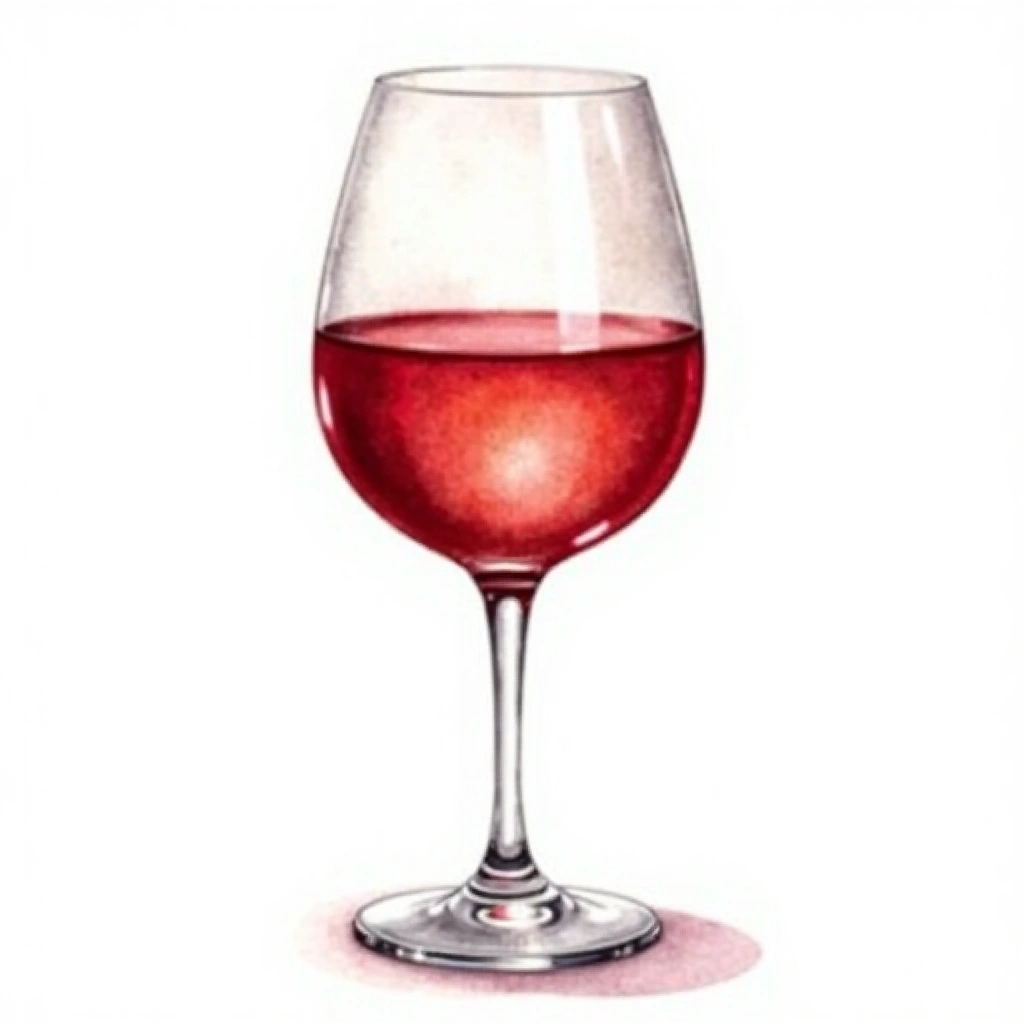
Appearance vocabulary describes what you see in the glass before you smell or taste.
Color descriptors for white wines: Water-white, pale lemon, gold, deep gold, amber, tawny, brown Color descriptors for red wines: Purple, violet, ruby, garnet, brick, tawny, mahogany
Intensity: Pale / medium / deep / opaque Clarity: Brilliant / clear / hazy / cloudy Viscosity: Watery / light / medium / oily (referring to the texture and speed of legs/tears)
Useful phrases: - "Deep ruby with a purple rim" (young red wine) - "Pale lemon with silver highlights" (young, high-acid white) - "Garnet with an orange-brick edge" (aged red) - "Deep amber with considerable viscosity" (sweet or oxidative wine)
Category 2: Aroma and Flavor Vocabulary
Fruit Descriptors
Citrus family: Lemon, lime, grapefruit, orange, blood orange, pomelo, yuzu Green/tree fruit: Apple (green, red, baked), pear, quince, peach, apricot, nectarine, plum Berry family: Raspberry, strawberry, cherry, cranberry, blackberry, blackcurrant (cassis), blueberry, elderberry Tropical fruit: Pineapple, mango, passion fruit, lychee, guava, banana, coconut Dried/cooked fruit: Raisin, prune, fig, date, dried apricot, jam, compote, marmalade
The type of fruit described gives strong signals. A Sauvignon Blanc from Marlborough shows grapefruit and passion fruit — fresh, ripe, tropical. The same grape from the Loire Valley shows green apple, lime, and gooseberry — leaner and more herbaceous. This vocabulary distinction instantly communicates climate and style.
Floral Descriptors
White flower: Jasmine, lily, white blossom, elder flower, honeysuckle Rose: Rose petal, rose water, dried rose Violet / iris: More common in red wines, especially Syrah/Shiraz and Viognier
Viognier is perhaps the most overtly floral grape in the world — its signature is peach blossom and apricot. Gewürztraminer from Alsace announces itself with rose water and lychee.
Herbal and Botanical Descriptors
Herbaceous: Fresh-cut grass, hay, nettles, green pepper (pyrazines), mint, eucalyptus Dried herbs: Thyme, rosemary, lavender, oregano, sage, dried leaves
Green or Herbaceous character in red wines is sometimes negative (under-ripe grapes), sometimes positive (cool-climate typicity). In Cabernet Franc from the Loire, a slight green pepper note is considered authentic and characteristic. In warm-climate Cabernet Sauvignon, it suggests inadequate ripening.
Spice Descriptors
Oak-derived: Vanilla, coconut, cedar, clove, smoke, toast Grape-derived: Black pepper (Varietal signature of Syrah/Shiraz), white pepper, cinnamon, anise, licorice, star anise
Earthy and Mineral Descriptors
Earthy: Mushroom, forest floor, truffle, wet stone, clay, dust, compost Minerality: Struck flint, chalk, slate, wet rock, oyster shell, saltiness
"Minerality" is contested in wine science — there is debate about whether soil minerals actually appear in wine flavor. Most researchers attribute mineral impressions to acidic character, sulfur compounds, or specific microbial interactions. Whether the mechanism is mineral or not, the descriptor is useful for communicating a recognizable sensory impression.
Savory and Textural Descriptors
Savory: Meat, leather, tobacco, dried herbs, soy sauce, umami Textural: Creamy, buttery, silky, velvety, grainy, chalky, grippy
Category 3: Structural Vocabulary
Structure vocabulary describes the architecture of wine rather than its aromas or flavors.
Acidity: Flat / low / medium / high / sharp / electric / mouthwatering / Crisp Tannin: Absent / soft / medium / firm / grippy / Astringent / Silky / Round / Angular / Structured / Supple / chewy / velvety Body: Light / light-medium / medium / medium-full / full / Full-Bodied Sweetness: Bone-dry / dry / off-dry / medium-sweet / sweet / luscious Alcohol: Low / medium / high / hot / warming
Integration: Whether structural elements are harmonious or stick out. - "Well-integrated oak" = you cannot isolate the oak from the wine; it is part of a seamless whole - "Intrusive acidity" = the acidity is so prominent it disrupts the Balance - "Unresolved tannins" = tannin has not softened or integrated; still aggressive and drying
Balance and Harmony Vocabulary
Balance: The central quality concept — all elements in proportion. - "Beautifully balanced" = nothing dominates; all elements coexist harmoniously - "Unbalanced" = one element distracts from the whole
Complexity: Multiple layers of aroma and flavor that evolve and shift over time. - "Layered" = there are multiple distinct elements discoverable in sequence - "Evolves in the glass" = aromas and flavors change as the wine opens up and warms slightly
Concentration: How intense and focused the wine's flavors are. - "Concentrated" = dense, powerful, extracted - "Dilute" = thin, watery, lacking fruit extract
Category 4: Quality and Finish Vocabulary
Finish
The Finish is the persistence of flavor and sensation after swallowing.
Length descriptors: Short (disappears immediately) / medium / long / very long Finish character descriptors: Bitter, drying, mineral, fruity, sweet, warming, aromatic, complex
A long, complex finish is one of the most reliable quality indicators. A short or unpleasant finish signals a simpler or faulty wine.
Overall Quality
Positive quality terms: Elegant, refined, expressive, precise, pure, terroir-driven, age-worthy, profound, seamless, compelling, serious Neutral-positive terms: Approachable, ready-to-drink, clean, well-made, varietal, characteristic Mixed or negative terms: Simple, one-dimensional, heavy, clumsy, overextracted, over-oaked, Flabby, hot (alcoholic), aggressive, sharp, harsh, thin
Practical Exercises for Building Vocabulary
Exercise 1: The Aroma Library
Buy a set of aroma standards (Le Nez du Vin 54-vial kit is the professional standard) and practice identifying isolated aromas blind. Train yourself to name each vial precisely before reading the label. This removes the "I know what it is but cannot find the word" problem by drilling the word-to-sensation connection.
Exercise 2: Comparative Writing
Open two wines of the same grape from different regions. Write 200 words about each. Do not allow yourself to use the same descriptor twice across both notes. This forces you to find precise, specific language rather than relying on generic terms.
Exercise 3: The One-Word Constraint
Before you write anything else, find one word that best captures the wine's overall character. Only one. "Powerful." "Delicate." "Nervous." "Generous." "Austere." This single word captures your primary impression before analysis distracts you.
Exercise 4: Structured Tasting Notes
Use this template for every wine you taste:
Color: [intensity] [hue] with [secondary hue at rim] Nose: [overall intensity], [primary aroma 1], [primary aroma 2], [secondary aromas], [tertiary if present] Palate: [acidity], [tannin], [body], [sweetness], [flavor descriptors], [finish: length and character] Assessment: [balance], [complexity], [quality level], [drinking window]
Fill it out every time, even when you think you know the wine. The habit builds the vocabulary faster than any other method.
Exercise 5: Reverse Engineering
Read a professional tasting note for a wine you have access to. Try to taste what the critic describes. Can you find the "pencil shavings"? The "dried violet"? The "saline finish"? This reverse engineering trains your palate to locate specific sensations rather than passively waiting for impressions to arrive.
Wine vocabulary is not memorized — it is earned through repeated sensory experience paired with disciplined language. The more you taste with intention, the richer and more precise your vocabulary becomes. There is no shortcut, but there is tremendous pleasure in the journey.
Avoiding Vocabulary Traps
The Descriptor Inflation Problem
Wine writing is prone to inflation: when every wine is "complex," "elegant," and "profound," these words lose meaning. Reserve superlatives for wines that genuinely earn them. A wine is "complex" only when it has multiple distinct layers of aroma and flavor that shift and evolve over time. A wine is "elegant" when its structural components are refined and proportional rather than powerful and assertive. Use these words precisely, and they communicate; use them indiscriminately, and they become noise.
Borrowing Without Understanding
It is tempting to adopt vocabulary you have read without being sure whether you actually detect what the word describes. "Wet stones" is an evocative descriptor often used for cool-climate whites — but have you smelled wet stones? Find a piece of chalk or slate, wet it, and smell it. Now you own that descriptor.
The same applies to "Minerality" broadly, "barnyard" (a controversial character from Brettanomyces yeast), "struck flint" (a reductive sulfur compound), and "petrol" in aged Riesling. These are real, identifiable aromas — but only after you have experienced and consciously registered them in isolation. Borrowed vocabulary without sensory grounding is decorative but not communicative.
The Subjectivity Balance
Wine tasting vocabulary contains both objective and subjective dimensions. Structural assessments — acidity high or low, tannin present or absent, body light or full — can be calibrated against shared reference points. Specific aroma descriptors are also objective in principle: either the volatile compound associated with "blackcurrant" is present in the wine above threshold levels, or it is not.
But the experience of a wine's Balance, its elegance, its expression of Terroir — these are genuinely interpretive. Two careful, experienced tasters can reach different conclusions about whether a wine is "in balance" or whether its oak is "integrated." Acknowledging this subjectivity does not make your vocabulary less valuable — it makes it honest.
Your vocabulary is most credible when it is specific about what is objective (structure, identifiable aromas) and thoughtfully hedged about what is interpretive (beauty, harmony, meaning). The taster who writes "high acidity, prominent violet aroma, long finish" is making defensible objective claims. The taster who adds "transcendently beautiful" is offering an interpretation — one you can share or dispute, and which only deepens the conversation.
 Cabernet Sauvignon
 Chardonnay
 Gewürztraminer
 Pinot Noir
 Riesling
 Sauvignon Blanc
 Syrah/Shiraz
 Viognier
 Aromatic White
 Bold Red
 Crisp White
 Elegant Red
 Rich White