Mosel: Germany's Riesling Paradise
An in-depth guide to Germany's Mosel region, home to the world's greatest Rieslings, covering the steep slate vineyards, the Pradikat classification, sweetness levels, and why Mosel Riesling is among the most undervalued fine wines on Earth.
The Steep Slopes of Genius
The Mosel river carves a serpentine path through western Germany, creating a landscape of impossibly steep, south-facing slopes that have been planted to vines since the Roman era. These slopes — some angled at 60 degrees or more — are among the most dramatic vineyard sites in the world. They are also among the most labor-intensive: harvesting must be done entirely by hand, sometimes with workers roped to stakes driven into the hillside.
This extreme viticulture exists for one reason: Riesling grown on Mosel slate produces wines of a purity, complexity, and longevity that has no parallel in the white wine world. At their best, Mosel Rieslings are breathtaking — crystalline, perfumed, electric with Acidity, and capable of aging for half a century or more. They are also, paradoxically, among the most undervalued fine wines on the planet.
Geography and Terroir
The Mosel wine region (officially Mosel since 2007, previously Mosel-Saar-Ruwer) encompasses the Mosel river and its two tributaries, the Saar and the Ruwer. The region stretches roughly 250 kilometers from the French border to where the Mosel meets the Rhine at Koblenz.
Soil: The Slate Factor
The Mosel's signature is its slate soil — specifically Devonian slate laid down some 400 million years ago. Slate performs multiple viticultural functions:
- Heat retention: Dark slate absorbs solar radiation during the day and radiates warmth back to the vines at night. In this marginal climate (50 degrees north latitude), that stored heat can make the difference between ripeness and failure.
- Drainage: The fractured, fissile rock drains water rapidly, stressing vines just enough to concentrate flavors.
- Mineral character: The specific type of slate — blue, grey, red, or volcanic — contributes to each vineyard's distinctive mineral signature. Mosel producers speak of these differences with the same conviction that Burgundians discuss limestone and clay.
The Sub-Regions
- Middle Mosel — The central stretch from Trittenheim to Erden contains the greatest concentration of top vineyards. Bernkastel, Wehlen, Graach, Piesport, Brauneberg, and Urzig are the famous names. Blue and grey slate dominate, producing wines of finesse and aromatic complexity.
- Saar — Cooler and higher than the main Mosel. Riesling here can be searingly acidic in lesser vintages but achieves a steely, mineral intensity in great years that is profoundly age-worthy. Wiltingen (home of the legendary Scharzhofberg) and Ockfen are key villages.
- Ruwer — The smallest tributary zone. Delicate, ethereal Rieslings with floral perfume and featherweight Body. Maximin Grunhaus and Karthauserhof are the reference estates.
- Terrassenmosel (Lower Mosel) — Downstream from the Middle Mosel, where the slopes are steepest and the vineyards most spectacular. Increasing quality as producers invest in these dramatic sites.
Understanding German Wine Labels
German wine labels are notoriously confusing, but the system is logical once you understand the framework.
The Pradikat System
Quality wines are classified by the ripeness of the grapes at harvest — measured in degrees Oechsle (sugar content). From lowest to highest:
- Kabinett — The lightest category. Crisp, low-alcohol (7-9%), often with a touch of residual sweetness balanced by razor-sharp acidity. Kabinett is the Mosel at its most refreshing.
- Spatlese ("late harvest") — Riper grapes harvested later. More concentrated, with deeper fruit and higher potential sweetness, though dry (trocken) versions exist.
- Auslese ("select harvest") — Individually selected bunches of very ripe grapes. Ranges from off-dry to moderately sweet. Complex, layered wines.
- Beerenauslese (BA) — Individually selected overripe berries, often affected by noble rot. Rich dessert wine of extraordinary concentration.
- Trockenbeerenauslese (TBA) — Shriveled, botrytized berries. Liquid gold — some of the most expensive wines in the world. Can age for 100+ years.
- Eiswein — Grapes harvested and pressed while frozen (at least -7 C). Intensely sweet with piercing acidity.
Dry vs. Sweet
This is the single greatest source of confusion in German wine. The Pradikat level indicates grape ripeness, not necessarily sweetness in the finished wine. A Spatlese can be:
- Trocken (dry) — All sugar fermented to alcohol. Higher alcohol, drier Palate.
- Feinherb (off-dry) — A small amount of residual sugar balanced by acidity.
- Fruchtsu (fruity-sweet) — Noticeable residual sugar, traditional Mosel style.
For Kabinett and Spatlese, the traditional Mosel style is to stop fermentation early, retaining residual sugar that is balanced by the grape's natural acidity. The resulting wines are low in alcohol (7-10%), light in Body, and possess a tension between sweetness and acidity that is uniquely refreshing.
The trend toward dry (trocken) wines has dominated German wine since the 1990s, driven by domestic market preferences. In the Mosel, this has created a parallel system: the VDP (Verband Deutscher Pradikatsweinguter) classification uses the terms Gutswein, Ortswein, Erste Lage, and Grosse Lage — modeled on Burgundy's hierarchy — for dry wines from classified vineyards.
Riesling in the Mosel: What to Expect
Mosel Riesling at its finest offers:
- Nose: White peach, lime, green apple, wet slate, honeysuckle, and with age, petrol (a prized characteristic, not a flaw).
- Palate: Electrifying acidity, mineral precision, and a texture that ranges from gossamer (Kabinett) to oily richness (Auslese). Sweetness, when present, is never heavy — it is buoyed by acidity into a vibrant equilibrium.
- Finish: Long, clean, and mineral-driven. Great Mosel Riesling finishes with a lingering sense of wet stone and citrus that can persist for a minute or more.
- Alcohol: Remarkably low by modern standards — 7% for a Kabinett, 12-13% for a dry Grosses Gewachs. This makes Mosel Riesling one of the few fine wines you can drink generously without excess.
Aging Mosel Riesling
Mosel Riesling is one of the most age-worthy white wines in existence. Kabinett from a good producer can improve for 10-20 years. Spatlese ages for 15-30 years. Auslese and above can last 40-100 years.
As Mosel Riesling ages, the primary fruit (peach, apple) evolves into honeyed, petrol, dried apricot, and smoke notes while the acidity remains firm. Old Mosel Riesling has a haunting quality — simultaneously fresh and ancient — that few other wines achieve.
The key to aging is acidity. Because Mosel Rieslings are among the most acidic wines made anywhere, they have a built-in preservative that keeps them vibrant across decades.
Buying Mosel Riesling
Value Proposition
Mosel Riesling is absurdly underpriced relative to its quality. A Kabinett from a top estate costs $15-25. A Spatlese runs $20-40. Even Grosse Lage (Grand Cru equivalent) dry Rieslings rarely exceed $60-80. Compare that to Burgundy Grand Cru or Napa Cabernet, and the value becomes obvious.
Key Producers
- Joh. Jos. Prum — The benchmark for fruity-sweet Mosel Riesling. Wehlener Sonnenuhr and Graacher Himmelreich.
- Egon Muller — Scharzhofberg. The most expensive Riesling in the world (for TBA), but Kabinett is still accessible.
- Fritz Haag — Brauneberger Juffer Sonnenuhr. Classic Middle Mosel precision.
- Willi Schaefer — Graacher Domprobst. Small production, cult following.
- Markus Molitor — Full range from Kabinett to TBA. Impeccable quality across the board.
- Clemens Busch — Pundericher Marienburg. Biodynamic, site-expressive wines.
- Van Volxem — Leading the dry Riesling movement on the Saar.
Serving
Serve Mosel Riesling at 8-10 C. Do not over-chill — extreme cold mutes the aromatics that make these wines extraordinary. Standard white wine glasses work well; avoid excessively large glasses that dissipate the delicate Nose.
Mosel Riesling and Food
Low alcohol and high acidity make Mosel Riesling one of the most food-flexible wines on Earth. The touch of residual sweetness in Kabinett and Spatlese styles is particularly effective with foods that defeat most red wines:
- Spicy cuisine — Thai, Vietnamese, Sichuan, Indian. The sweetness tempers chili heat while the acidity refreshes the palate. A Mosel Kabinett with green Thai curry is one of the great cross-cultural pairings.
- Smoked fish — Smoked salmon, trout, or mackerel with a Spatlese. The wine's fruit sweetness complements the smoke.
- Pork — Especially roast pork with apple sauce or crackling. The German classic pairing for a reason.
- Soft, creamy cheeses — Brie, Camembert, fresh chevre. The acidity cuts through the fat while the residual sugar complements the cream.
- Shellfish — Crab, lobster, scallops. The delicacy of the wine matches the delicacy of the protein.
- Dry (trocken) styles — Serve with grilled white fish, veal schnitzel, asparagus (the great German obsession), and lighter poultry dishes.
The low alcohol makes Mosel Riesling an ideal lunch wine — you can drink a full glass (or two) and still function productively in the afternoon. This is not a trivial point. In a world where 15% alcohol has become routine, a 7.5% Mosel Kabinett offers genuine pleasure without consequence.
The Mosel's Future
Climate change is reshaping the Mosel in ways both positive and troubling. Warmer temperatures mean more reliable ripening in a region where achieving ripeness was historically the primary challenge. Vintages like 2018, 2019, and 2020 produced extraordinarily ripe fruit with ease — a situation unimaginable 30 years ago.
The risks are real, though. Warmer conditions favor earlier-ripening varieties and may eventually push Riesling to even higher elevations or more northerly sites. Heavy rainfall events (increasingly common) cause erosion on the steep slate slopes, threatening the terraced vineyards that took centuries to build. And as other German regions (Rheingau, Pfalz, Nahe) benefit from warming, the Mosel's competitive advantage as a region where marginal climate creates tension and elegance may erode.
For now, the Mosel remains one of the world's truly unique wine regions — a place where geology, geography, and grape variety align with a precision that cannot be engineered or replicated. The wines are unlike anything else, and at current prices, they represent the finest value in fine wine.
The Mosel's steep slopes, its ancient slate, and its marginal climate produce wines that are the opposite of power — they are about transparency, tension, and an almost musical balance between sweetness and acidity. In a wine world that often equates quality with weight, Mosel Riesling is a reminder that the lightest wines can also be the most profound.
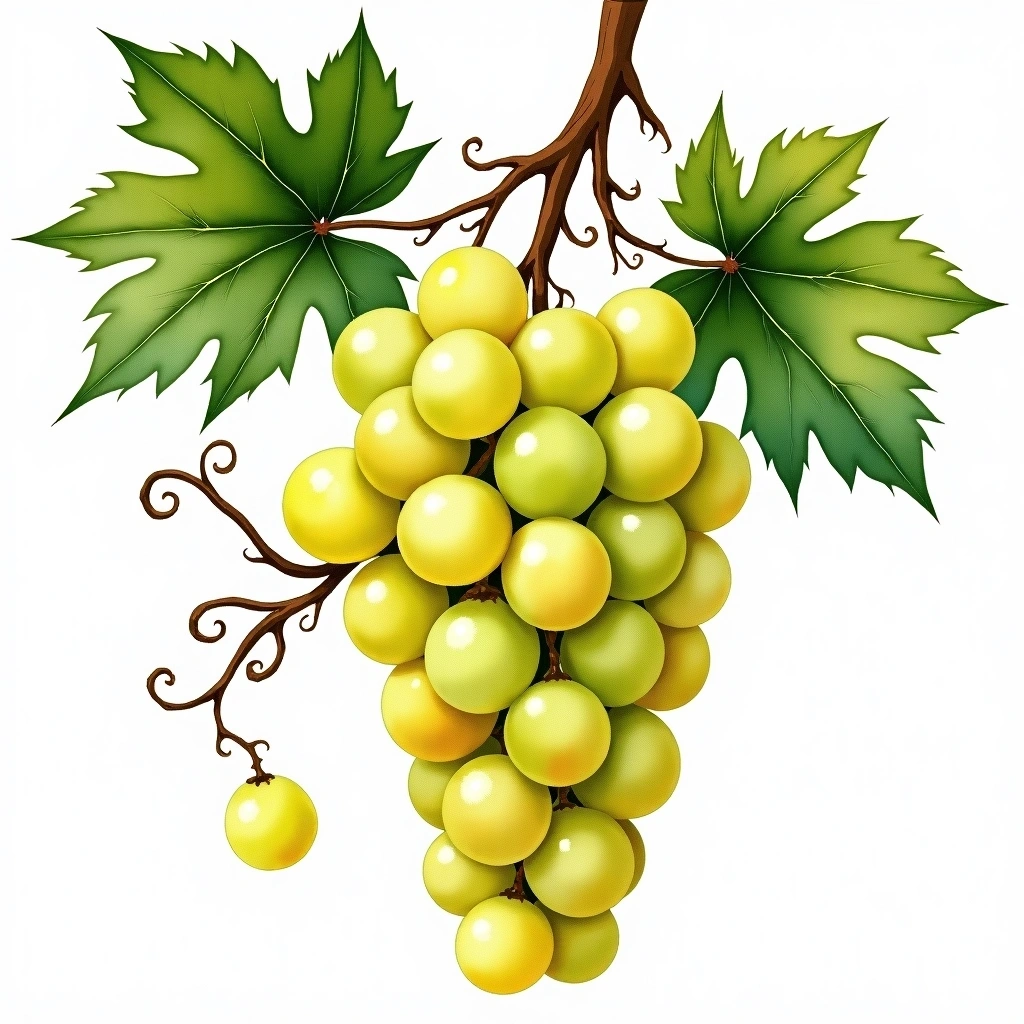 Riesling
 Aromatic White
 Crisp White
 Light White